MIT (Massachusetts Institute of Technology): Complete Guide for International Students (2026) — Full Scholarship, SAT, CSS, Deadlines
Everything international students need to know about MIT — full scholarships, need-blind admissions, SAT requirements, CSS Profile, acceptance rate, transfer options, English requirements, deadlines, and step-by-step application guide.

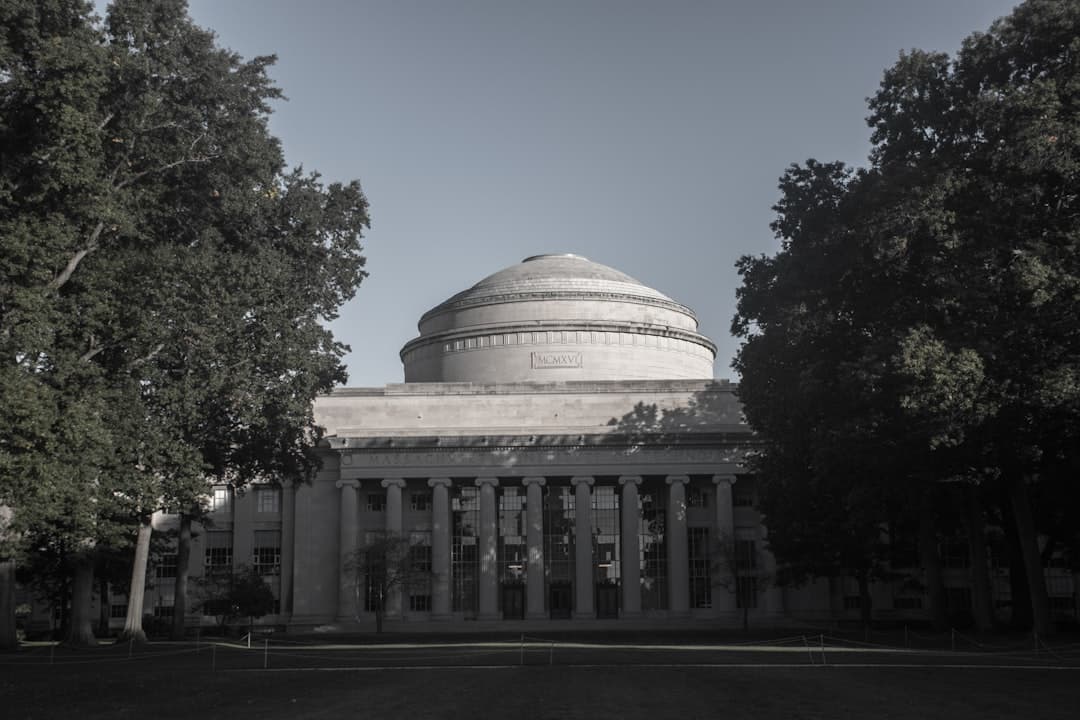
If you are an international student looking for a school that will pay for everything — tuition, housing, food, books, even flights home — and you want the best STEM education on the planet, MIT should be at the very top of your list.
MIT is not just one of the best universities in America — it is consistently ranked the #1 university in the world for science and engineering. And here is the part that changes everything: MIT is need-blind for international students and meets 100% of demonstrated financial need. No loans. All grants. Free money.
I came to America from South Africa on a full scholarship, and schools like MIT are exactly the kind of opportunity I wish I had known about earlier. Let me break down everything you need to know.
Quick Facts for International Students#
| Detail | Info |
|---|---|
| School Name | Massachusetts Institute of Technology (MIT) |
| Location | Cambridge, Massachusetts (across the river from Boston) |
| Type | Private research university |
| Level | Undergraduate (Bachelor's degree) |
| Student Body | ~4,600 undergraduates |
| Student-to-Faculty Ratio | 3:1 |
| Financial Aid for Internationals | Meets 100% of demonstrated need — all grants, no loans |
| % of Undergrads Receiving Scholarships | ~58% |
| Average Scholarship Amount | ~$60,000+/year |
| Need-Blind for Internationals | Yes — fully need-blind |
| SAT/ACT Required | Yes — test-flexible (SAT/ACT or alternative assessments) |
| English Proficiency Required | Yes — TOEFL 100+ / IELTS 7.5+ / Duolingo 120+ |
| Admissions Page | mitadmissions.org |
| Financial Aid Page | sfs.mit.edu |
| International Students | mitadmissions.org/apply/international |
| Application Platform | MIT's own application (my.mit.edu) — NOT Common App |
| Application Fee | $75 (fee waivers available) |
| CSS Profile Required | Yes (code 3514) + IDOC |
| CSS Fee Waiver | No waiver codes for internationals — but you can submit after admission if the fee is a hardship |
| Acceptance Rate (Overall) | ~3.9–4.5% (freshman); ~1.4–2.0% for internationals |
| International Students | ~11% of undergrad body |
| Transfer Students Accepted | Yes — need-blind and meets 100% of demonstrated need for international transfers (Fall-entry only) |
| Transfer Acceptance Rate | ~4% overall, often below 1–2% for internationals |
What Makes MIT Special#
1. Need-Blind for International Students#
This is the biggest deal. MIT is one of only a handful of universities in the entire world that is need-blind for international students. This means your financial situation is completely invisible to the admissions committee. Whether your family earns $5,000 or $500,000 per year, it does not affect your chances of admission.
Once you are admitted, MIT guarantees to cover 100% of your demonstrated financial need with grants — free money you never pay back. Families earning under about $100,000 with typical assets pay $0. Nothing. Not a single dollar.
2. STEM Powerhouse — #1 in the World#
MIT is the world's leading institution for science, technology, engineering, and mathematics. If you want to study computer science, engineering, physics, biology, mathematics, economics, or any technical field, there is no better place. MIT alumni have founded companies like Dropbox, Intel, Qualcomm, and thousands more.
3. MIT's Own Application#
MIT does NOT use the Common App. They have their own application platform at my.mit.edu. This is important — you cannot apply to MIT through Common App, Coalition App, or any other platform. The MIT application has its own essays, its own format, and its own deadlines.
4. UROP — Undergraduate Research Opportunities#
MIT's Undergraduate Research Opportunities Program (UROP) allows first-year students to work on real research alongside professors. Over 85% of MIT undergrads participate in research before they graduate. As an international student, this gives you hands-on experience, mentorship, and publications that set you apart for graduate school or industry.
5. Maker Culture and Collaboration#
MIT is famous for its hands-on, "build things" culture. Students don't just learn theory — they build robots, design satellites, create startups, and solve real-world problems. The culture is intensely collaborative, not competitive. Students work together on problem sets, projects, and research.
Financial Aid Breakdown#
If you are admitted with full financial need, here is what a typical MIT aid package covers:
| Cost | Amount/Year | Covered? |
|---|---|---|
| Tuition | ~$61,000 | Yes — fully covered |
| Room and Board | ~$21,000 | Yes — fully covered |
| Books and Supplies | ~$1,000 | Yes — covered |
| Personal Expenses | ~$2,000 | Yes — covered |
| Travel | Varies | Yes — travel grants available |
| Total Cost | ~$85,000+/year | $0 out of pocket with full aid |
All grants. No loans. You graduate debt-free.
MIT's financial aid tiers:
- Families earning under about $100,000 with typical assets: pay $0
- Families earning above ~$100,000: pay a reduced amount on a sliding scale based on demonstrated need
- About 58% of all undergrads receive MIT scholarships
- 89%+ of students graduate debt-free
SAT/ACT — Testing Required#
Unlike many schools that have gone test-optional, MIT requires standardized testing. You must submit one of the following:
- SAT — aim for 1520+ to be competitive
- ACT — aim for 34+ to be competitive
- Approved alternative assessments — MIT is test-flexible, meaning they accept certain alternative exams if you cannot access the SAT or ACT
MIT brought back its testing requirement because their research showed that test scores, combined with other factors, help them identify students who will thrive at MIT. If you are an international student, plan ahead and register for the SAT or ACT early.
Pro tip: MIT superscores the SAT — they take your highest section scores across multiple test dates. So if you take the SAT twice, they combine your best scores.
English Proficiency Requirements#
If English is not your first language, you must submit one of these:
| Test | Minimum Score |
|---|---|
| TOEFL iBT | 100 (minimum 23 per section) |
| IELTS | 7.5 |
| Duolingo English Test | 120 |
These are competitive minimums — aim higher if possible. The per-section minimum on TOEFL is important: you need at least 23 in reading, listening, speaking, AND writing. If you attended an English-medium school for several years, contact MIT's admissions office to ask about a possible waiver.
CSS Profile and Financial Aid Application#
To get financial aid, you must complete financial aid forms. Here is what MIT requires:
Step 1: CSS Profile#
Go to cssprofile.collegeboard.org and complete the form.
What you need:
- Parents' income information and tax returns (or equivalent)
- Bank statements
- Information about property, assets, and family expenses
A note on the CSS fee: MIT does not issue CSS Profile fee waiver codes to international students, and there is no free paper alternative. But MIT has a unique policy — if the CSS fee is a genuine hardship, you can wait and submit the CSS Profile after you are admitted, with no penalty to your aid evaluation. Use MIT's school code 3514.
Watch my CSS Profile walkthrough: How to Fill Out the CSS Profile
Step 2: IDOC (Institutional Documentation Service)#
After submitting the CSS Profile, MIT requires you to upload supporting documents through IDOC — the College Board's document verification service. This includes tax returns, pay stubs, or other proof of income. International students may need to provide translated documents.
How to Apply — Step by Step#
Step 1: Submit Your Application via MIT's Own Platform#
Apply at my.mit.edu — MIT does NOT accept Common App or Coalition App.
What you need:
- MIT application essays (multiple short essays — they are unique to MIT)
- High school transcripts (translated to English if needed)
- 2 teacher recommendations (one math/science, one humanities) + 1 counselor recommendation
- SAT or ACT scores (required)
- English proficiency scores (TOEFL/IELTS/Duolingo)
- Activities list and extracurriculars
- Optional: maker portfolio, arts portfolio, or additional materials
Application fee: $75 — fee waivers available if you have financial need. Request a fee waiver directly through the MIT application.
Step 2: Submit Financial Aid Forms#
Submit the CSS Profile and IDOC documents. Check your MIT application portal regularly for any additional document requests.
Step 3: Interview#
MIT offers optional interviews with Educational Counselors (alumni volunteers) around the world. If an interview is available in your area, do it. It is a chance to show who you are beyond your application. Interviews are not evaluative of you — they are informational and conversational.
Step 4: Wait for Your Decision#
MIT is need-blind, so your financial situation has zero impact on admissions. If admitted, your acceptance letter will come with a complete financial aid package.
Deadlines#
| Round | Application Deadline | Financial Aid Deadline | Decision |
|---|---|---|---|
| Early Action | November 1 | November 1 | Mid-December |
| Regular Action | January 1 | February 15 | Mid-March |
| Transfer | March 15 | March 15 | Mid-May |
Pro tip: MIT's Early Action is non-binding — this means you can apply EA, get a decision in December, and still apply to other schools Regular Decision. There is no penalty. If MIT is a top choice, apply Early Action. EA is not restricted either — you can apply EA to MIT and EA to other schools simultaneously.
Need-Blind: What It Means for You#
MIT is need-blind for international students. This is one of the most important facts in this entire guide. It means:
- Your financial need is NOT considered during admissions
- Whether you need $0 or $85,000 per year, it does not affect your chances
- Once admitted, MIT guarantees to meet 100% of your demonstrated need
- All aid is grants — no loans required
Only a tiny number of schools in the world offer this to international students. MIT is one of them. This makes MIT one of the most accessible elite universities on the planet for talented students from low-income families.
Transfer Students#
Here's what makes MIT extraordinary: it is need-blind for international transfer applicants too, and it meets 100% of their demonstrated financial need with grants — the same all-grant, no-loan promise freshmen get. Almost no other elite university does this for international transfers. The catch is the odds: the transfer application is Fall-entry only for international students, and acceptance is brutal.
Transfer requirements:
- At least 1 year of college coursework
- College transcripts (all post-secondary transcripts) and final high school transcripts
- Transfer essays (via MIT's application)
- SAT or ACT scores (required for transfers too)
- 2 professor recommendations + a College Report / School Official's Report
- CSS Profile and IDOC for financial aid
- Deadline: March 15
- Acceptance rate: ~4% overall, often below 1–2% for internationals (fewer than about 20–30 transfers admitted worldwide each year)
The transfer acceptance rate is extremely low, so make sure your college grades are exceptional and your application is compelling.
What MIT Looks For#
MIT's admissions process is unique. They are looking for a very specific kind of student:
- Hands-on problem solver — MIT wants students who build, create, tinker, and make things. If you have built projects, conducted experiments, coded apps, or solved real problems in your community, highlight that.
- Collaborative spirit — MIT's culture is deeply collaborative. They want students who help others, work in teams, and lift people up — not lone wolves.
- Alignment with MIT's mission — MIT's mission is to advance knowledge and educate students to serve the world. Show how you want to use your education to make an impact.
- Academic excellence in STEM — Strong grades in the most challenging math and science courses available to you (AP, IB, A-Levels). MIT wants to see that you can handle their rigorous curriculum.
- Authenticity and character — Be yourself. MIT reads every essay carefully. They want to know who you really are — your quirks, your passions, your story.
Want help with your essays? Try Culturo.io — it reviews your essays and rates your application. I also have an ebook with example essays: How to Get Into Top Schools in America
Your Backup Plan#
MIT is the most competitive university in the world (~3.9% acceptance rate). Apply, but build a balanced list of 8-15 schools.
If you don't get in or need more funding:
- MPOWER Financing — Student loans with no cosigner, available at 400+ schools
- University of the People — Tuition-free accredited online US degree
- Check my full course: Study for FREE in the USA — Bachelor's for 60+ schools that meet full need
Watch My Videos on MIT#
I've made several videos breaking down MIT for international students. Watch them here:
- MIT Full Scholarship for International Students — 100% Need-Based Aid (TikTok)
- MIT Free Scholarships: How International Students Can Study for Free (TikTok)
- 4 Top US Universities with No Tuition for Families Under $200K — Princeton, Harvard, MIT, Yale (TikTok)
- MIT Master's in Finance Application: Complete Step-by-Step Guide (YouTube)
Bottom Line#
MIT is one of the greatest opportunities on Earth for international students who need full financial aid. Need-blind admissions, 100% of need met with grants, the #1 STEM education in the world, a hands-on maker culture, and a genuine commitment to supporting students from every corner of the globe.
If you have strong grades, a passion for building and solving problems, and the courage to apply to one of the most competitive schools in the world — do it. MIT could change your life and your family's life forever.
Want more help?
- See MIT's full school profile — need-blind policy, SAT requirement, CSS steps, and deadlines at a glance
- Join The Village — thousands of students helping each other
- Book a 1-on-1 call with me — 60 minutes of personalized guidance
- Subscribe to @williamlebeau on YouTube — video guides and walkthroughs
- Take the free Bachelor's course — 10 chapters covering everything

Need more help?
Want me to walk you through your applications, step by step? That's what my mentorship program is for.
In Nigeria? Skool is blocked there — if you see “under maintenance,” open the link with a VPN set to the US or UK.